Transaction Simulation, Token Approvals, and the Real Work of a Multi-Chain Wallet
A common misconception in DeFi is that a wallet’s main job is to hold keys and display balances. In practice, the harder job is helping a user understand what a transaction is about to do before an irreversible signature is made. A button labeled “Confirm” can authorize a token transfer, create a spending allowance, interact with several contracts, or route assets through a protocol whose behavior is not obvious from the website interface. The central question is therefore not simply whether a wallet is secure. It is whether the wallet can make transaction risk legible.
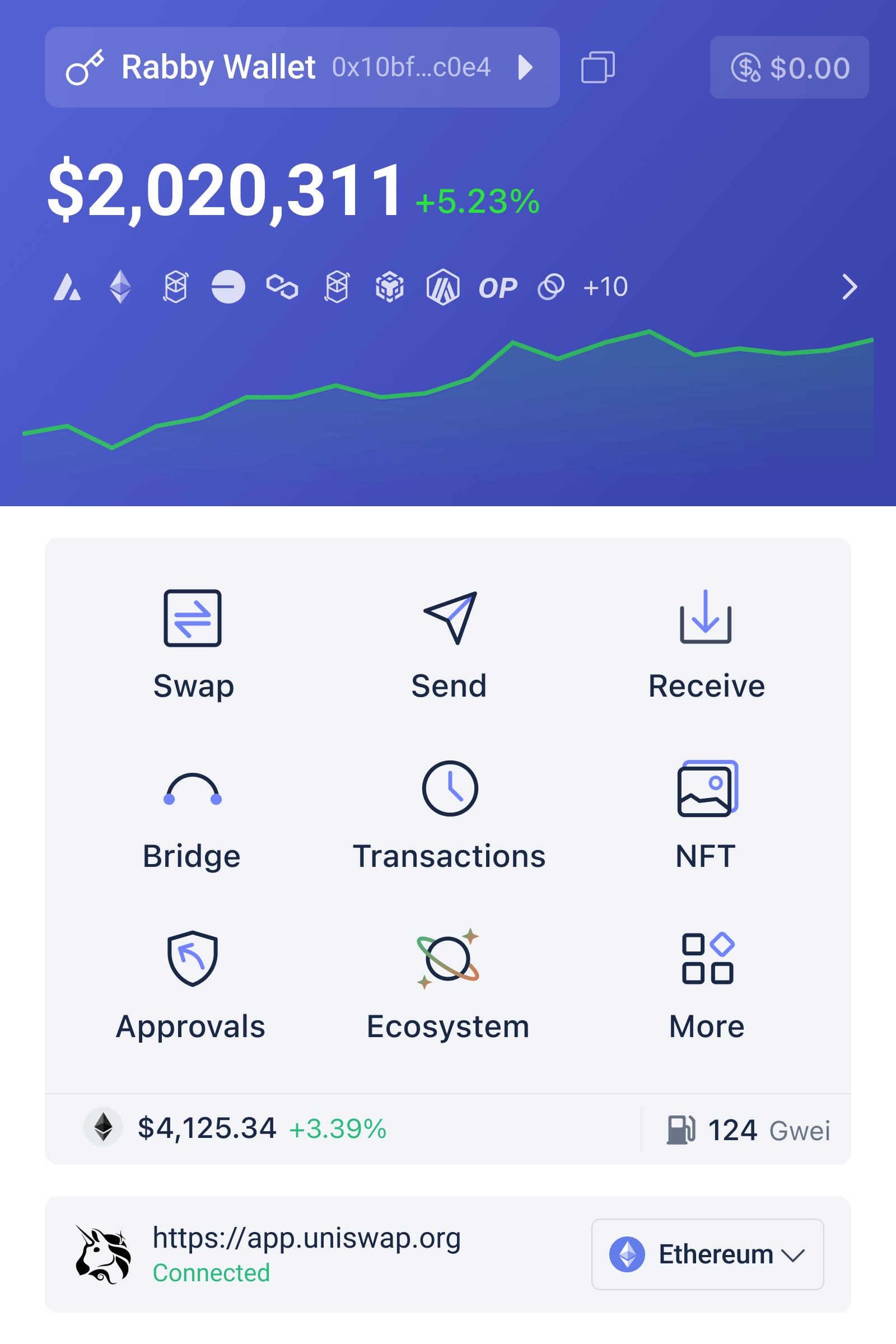
This is where transaction simulation, token approval management, and multi-chain design meet. Rabby’s positioning around Ethereum and EVM networks, including its browser extension for Chrome and Brave, reflects a broader change in wallet design: the wallet is becoming an interpretation layer between a user and smart-contract infrastructure. That is useful, but it is not the same as eliminating risk. Simulation is an estimate, approvals are permissions rather than payments, and multi-chain convenience can also multiply opportunities for error.
Myth: a transaction simulation is a guarantee
Transaction simulation is best understood as a controlled “what would happen if” test. Before a signed transaction is broadcast, a wallet can ask a blockchain node to execute the proposed call against a recent view of the network state. The result may reveal expected token movements, contract interactions, gas behavior, or a likely failure. Instead of seeing only a technical function name and hexadecimal data, the user may receive a more useful interpretation: which asset is leaving the wallet, which asset is expected in return, and which contract is receiving authority.
The mechanism matters. A simulation does not predict the future in the abstract; it replays a proposed action against a particular state. If the pool price changes, liquidity is removed, a lending position is liquidated, or another transaction is confirmed first, the actual result can differ. Some protocols also depend on external data, block timing, signatures from other participants, or interactions that are difficult to model completely. A successful simulation means that the call appeared executable under the tested conditions. It does not mean the transaction is economically sensible or safe.
That distinction corrects one of the most persistent misunderstandings in wallet security. A simulation can often identify an unexpected recipient or an unusually large token outflow, but it may not recognize that a legitimate-looking contract is governed by an upgrade mechanism, that a trade has severe slippage, or that a token itself can impose transfer restrictions. Nor can it reliably determine whether a protocol’s business model is sound. Simulation improves visibility into execution; it does not replace contract due diligence, market judgment, or careful review of the website and domain being used.
For a US-based DeFi user, the practical benefit is still substantial. A transaction that fails after consuming gas is costly, while a transaction that succeeds but grants an unintended permission can be much worse. Simulation creates a pause before signing. That pause is valuable because many attacks exploit haste, visual familiarity, or the assumption that a “swap” button represents only a simple exchange.
Approvals are permissions, not payments
Token approvals deserve separate attention because they are frequently confused with transfers. In the common ERC-20 model, a wallet owner can authorize a contract to spend a specified amount of tokens on the owner’s behalf. The approval itself may move no tokens. It establishes an allowance that the approved contract can later use, often as part of a swap, deposit, liquidity position, or lending transaction.
The non-obvious risk is temporal. A transfer is usually an event to inspect at the moment it occurs. An approval can remain active after the original DeFi session has ended. If the approved contract is compromised, misconfigured, upgraded in an unexpected way, or simply malicious, an allowance may provide a route to spend funds later. The danger is not that every approval is unsafe; approvals are fundamental to how many EVM applications operate. The danger is treating a standing permission as if it were a one-time payment.
Good approval management therefore involves two questions: what contract is being authorized, and how much authority does it need for the intended action? A limited allowance can reduce exposure compared with an effectively unlimited allowance, although it may require another approval later. An unlimited allowance can be more convenient and may avoid repeated approval transactions, but it enlarges the potential loss if the permission is abused. The right choice depends on the asset, protocol, wallet balance, frequency of use, and the user’s willingness to manage permissions actively.
Approval revocation is also not a magic eraser. Revoking an allowance generally requires an on-chain transaction and therefore gas. It removes or reduces a permission recorded on a specific network, not across every chain where the same token name may appear. A user who approves a protocol on Ethereum has not necessarily approved it on Arbitrum, Base, Polygon, or another EVM network. This chain-specific nature is easy to miss when a multi-chain wallet presents several networks in one interface.
How a wallet can turn raw calls into decisions
A browser extension sits at a sensitive boundary. A decentralized application requests an action, the wallet receives the request, and the user decides whether to sign. Transaction interpretation can add context at that boundary by grouping contract calls, identifying likely asset movements, flagging approval requests, and showing whether the proposed action appears to be a swap, deposit, withdrawal, or permission change.
That interpretation is most useful when it is comparative rather than merely descriptive. “Approve token” is less informative than “authorize this contract to spend up to this amount of this asset.” “Execute transaction” is less informative than a clear account of the assets leaving, the assets expected back, and the permissions that remain afterward. The aim is not to make every interaction appear simple. It is to expose complexity before the user signs.
Users preparing to install the Rabby browser extension should approach the process as a security exercise, not as a race to connect to a site. Use the project’s official distribution path, verify the browser extension source, and treat any request for a seed phrase or private key as unacceptable. For readers checking the installation route, the rabby wallet download resource can serve as a starting point, but the broader principle is more important than any single page: independently verify the source before importing or creating wallet credentials.
After installation, a prudent workflow is to connect only to applications the user intended to visit, check the active network, inspect the contract and asset details, and read approval scope before signing. Hardware-wallet confirmation remains valuable for larger balances because it adds an independent signing step. A wallet’s warnings are one layer of defense; the user’s verification of the URL, network, amount, and permission is another.
Myth: one multi-chain wallet means one unified risk
A multi-chain wallet can make EVM activity easier to manage because the user can move between networks without maintaining an entirely separate interface for each ecosystem. The same address format may appear across several chains, and a unified portfolio view can reduce friction. But the underlying systems remain separate. Balances, allowances, transaction histories, gas assets, contract deployments, and security assumptions can differ by network.
This produces a subtle operational hazard: interface continuity can conceal protocol discontinuity. A user may recognize a familiar token symbol on a different chain without noticing that it is a separate contract. A similarly named application may be deployed by a different team. A transaction that is inexpensive on one network may require a different gas asset on another. A bridge may create additional trust and timing assumptions rather than functioning as a simple transfer between identical ledgers.
Chain identity is therefore part of transaction security. Before signing, users should confirm the network name and, when the transaction is consequential, the contract address and asset contract. They should also remember that an approval made on one chain does not automatically carry over to another. For active DeFi users, maintaining a small operational balance for gas on the relevant network can prevent rushed decisions, but holding gas on many chains also creates more account-management complexity.
Multi-chain tools face a genuine trade-off here. More automation and aggregation can improve usability, while more abstraction can make it harder to see which ledger is actually changing. The best design is not necessarily the one that hides the most technical detail. It is the one that reveals the detail at the moment it affects the decision, without forcing every user to parse raw calldata for routine activity.
Where simulation and approval warnings break down
The limits of transaction simulation are especially important in adversarial environments. A simulation may use a remote node, an estimated gas limit, and a state snapshot that becomes stale. It may not reproduce every condition created by ordering, timing, or another transaction entering the same block. A sandwich attack, for example, depends on transaction ordering and market response; a preview cannot guarantee that the displayed exchange rate will survive until confirmation.
There is also a difference between technical execution and economic outcome. A transaction can succeed exactly as simulated while producing a poor trade because slippage was set too high, liquidity was thin, or the received token has limited ability to be sold. A contract call can be correctly decoded while the contract itself remains untrusted. Warnings are signals for investigation, not official certifications of safety.
Approval analysis has boundaries as well. Not every permission model looks like a simple ERC-20 allowance. Some protocols use permit signatures, operator approvals, NFTs with separate approval semantics, proxy contracts, or custom authorization logic. A wallet can make common patterns easier to recognize, but sophisticated users still need to understand what authority a protocol receives and whether that authority can change over time.
These limitations do not make the features superficial. They define the correct mental model. Simulation reduces uncertainty about one proposed execution. Approval management reduces unnecessary standing authority. A multi-chain wallet reduces interface fragmentation. None of the three removes the need to verify the application, understand the asset, and control signing authority.
A reusable review framework for DeFi transactions
Before approving a transaction, ask four questions. First, what exact network is active, and is it the network on which the intended assets and application exist? Second, what assets can leave the wallet, and what assets are expected in return? Third, is the transaction creating, increasing, or extending a permission that may remain active? Fourth, what assumption would make the transaction unsafe if it changed between simulation and confirmation?
The fourth question is often the most valuable. It directs attention to price movement, contract upgrades, oracle data, bridge operation, transaction ordering, and time-sensitive rewards. If the answer is unclear, the rational response is not necessarily to reject every transaction. It may be to lower the amount, set conservative slippage, use a separate wallet, limit the approval, or postpone the action until the mechanism is understood.
Recent project messaging has emphasized Rabby as a wallet for Ethereum and EVM chains, with Chrome and Brave extension access presented as a way to get started across Web3. The meaningful implication is not that a wallet becomes a universal security guarantee. If transaction interpretation and permission management continue to improve, wallets may increasingly function as personal transaction-control systems rather than passive key containers. Whether that improves safety will depend on warning quality, user attention, protocol transparency, and how well the interface communicates uncertainty.
The signal to watch is not the number of supported chains or the number of visible alerts by itself. It is whether users can distinguish an ordinary call from a durable permission, a familiar token from a verified asset, and a successful execution from a sound economic decision. That is the standard by which a multi-chain DeFi wallet should be judged.
Frequently Asked Questions
Does transaction simulation make a DeFi transaction safe?
No. Simulation can show how a proposed call is expected to execute against a particular blockchain state, which may reveal unusual transfers, failures, or approval requests. It cannot guarantee future prices, transaction ordering, contract honesty, token liquidity, or protection from every protocol and phishing risk. Treat the result as decision-support information, not an endorsement.
Why should I care about token approvals if no tokens move immediately?
An approval can give a contract authority to spend tokens later. That authority may persist after the current transaction or DeFi session ends. Review the approved contract and amount, prefer a limited allowance when practical, and remember that reducing or revoking an allowance requires a separate on-chain action on the specific network where it was created.
Is a multi-chain wallet safer than using separate wallets?
Neither arrangement is automatically safer. A multi-chain wallet can improve visibility and reduce interface switching, but it can also make different networks and contract environments feel deceptively similar. Safety depends on network verification, application checks, approval discipline, secure key storage, and the size of funds exposed to each interaction.